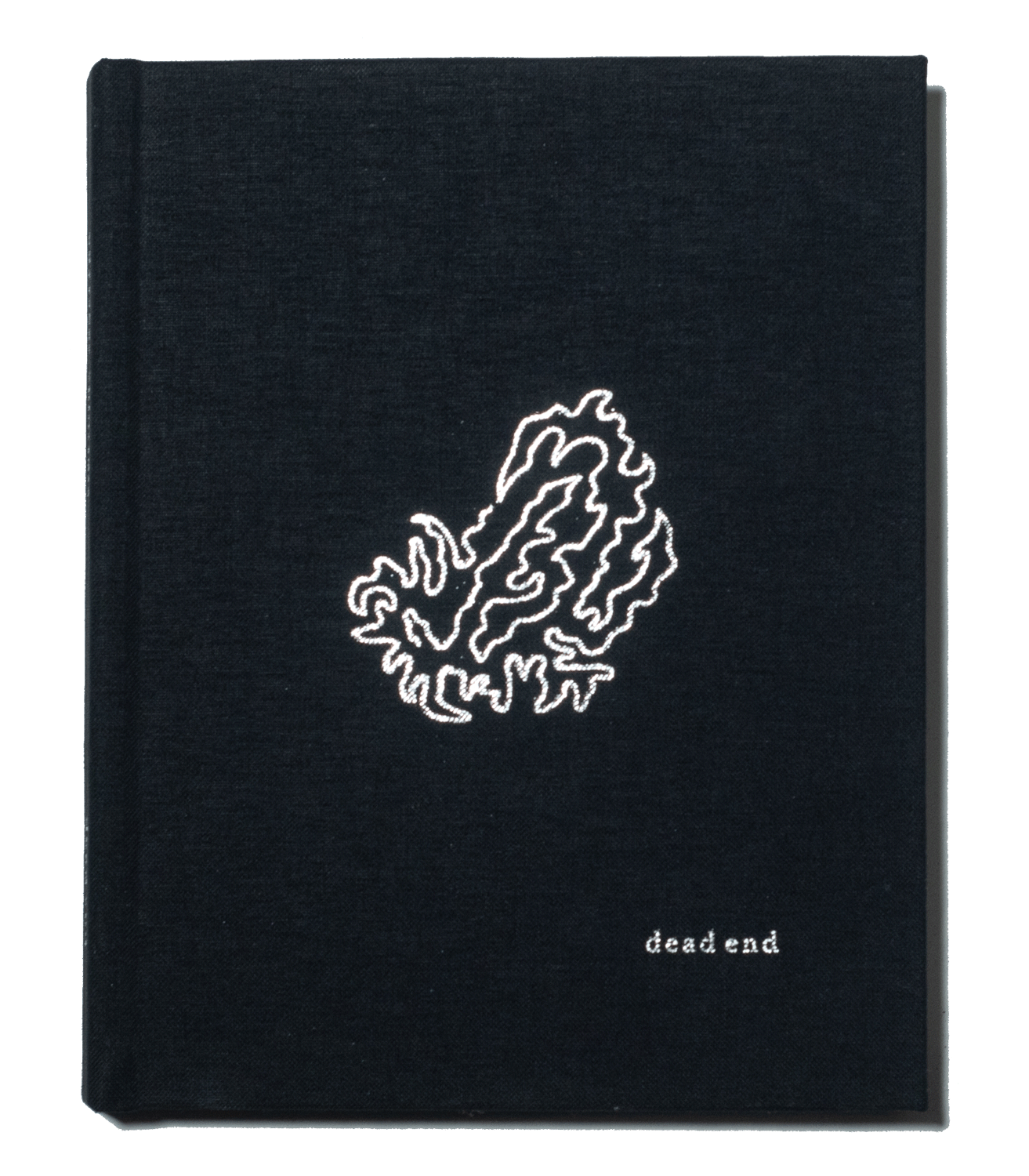
Dead End
Self-published, limited edition of 50 copies
18,5 x 14,5 cm
112 pages, 54 images
Hardcover
Title and design elements on the front and spine of the book engraved with silver
Hand-binded with thick waxed thread
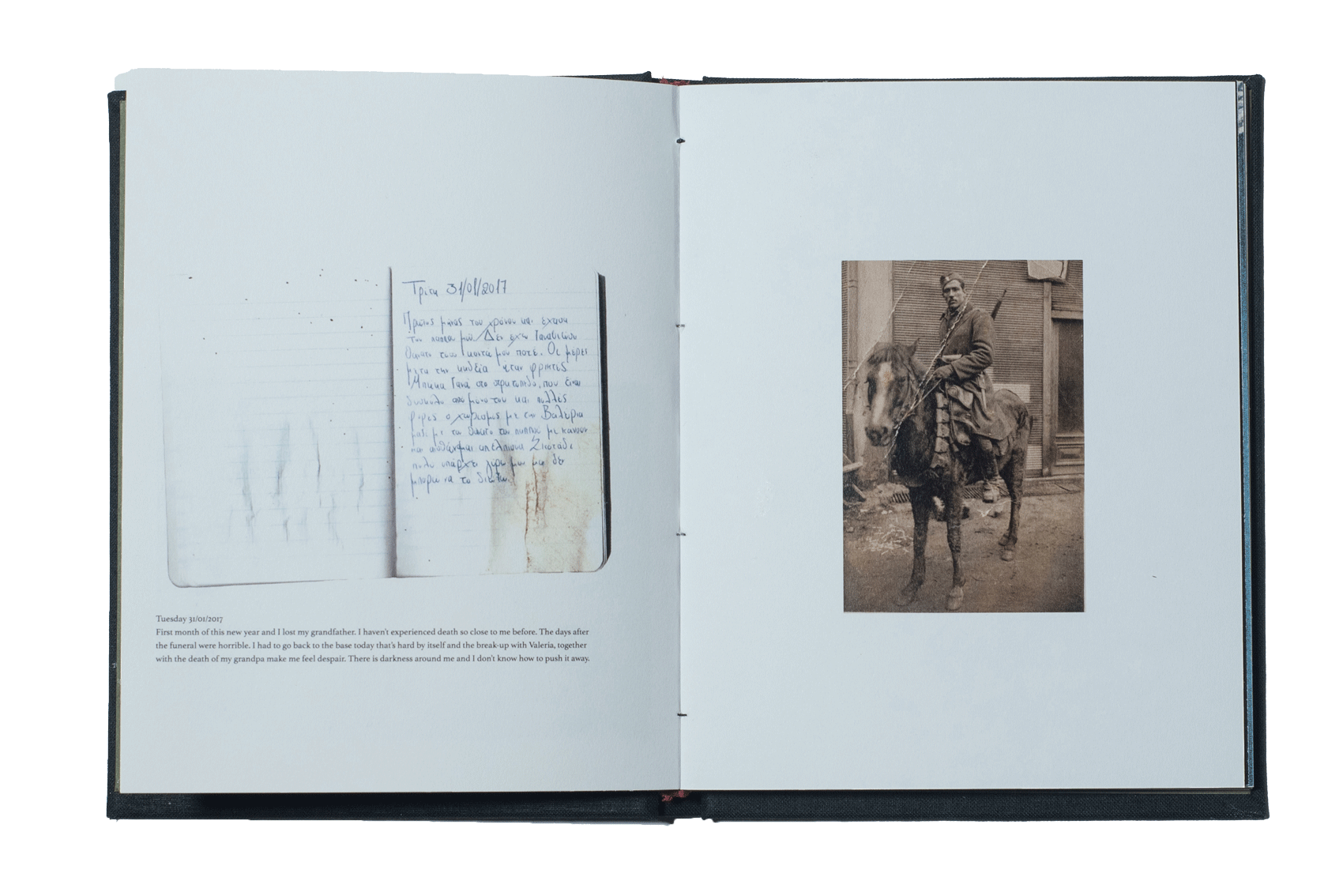
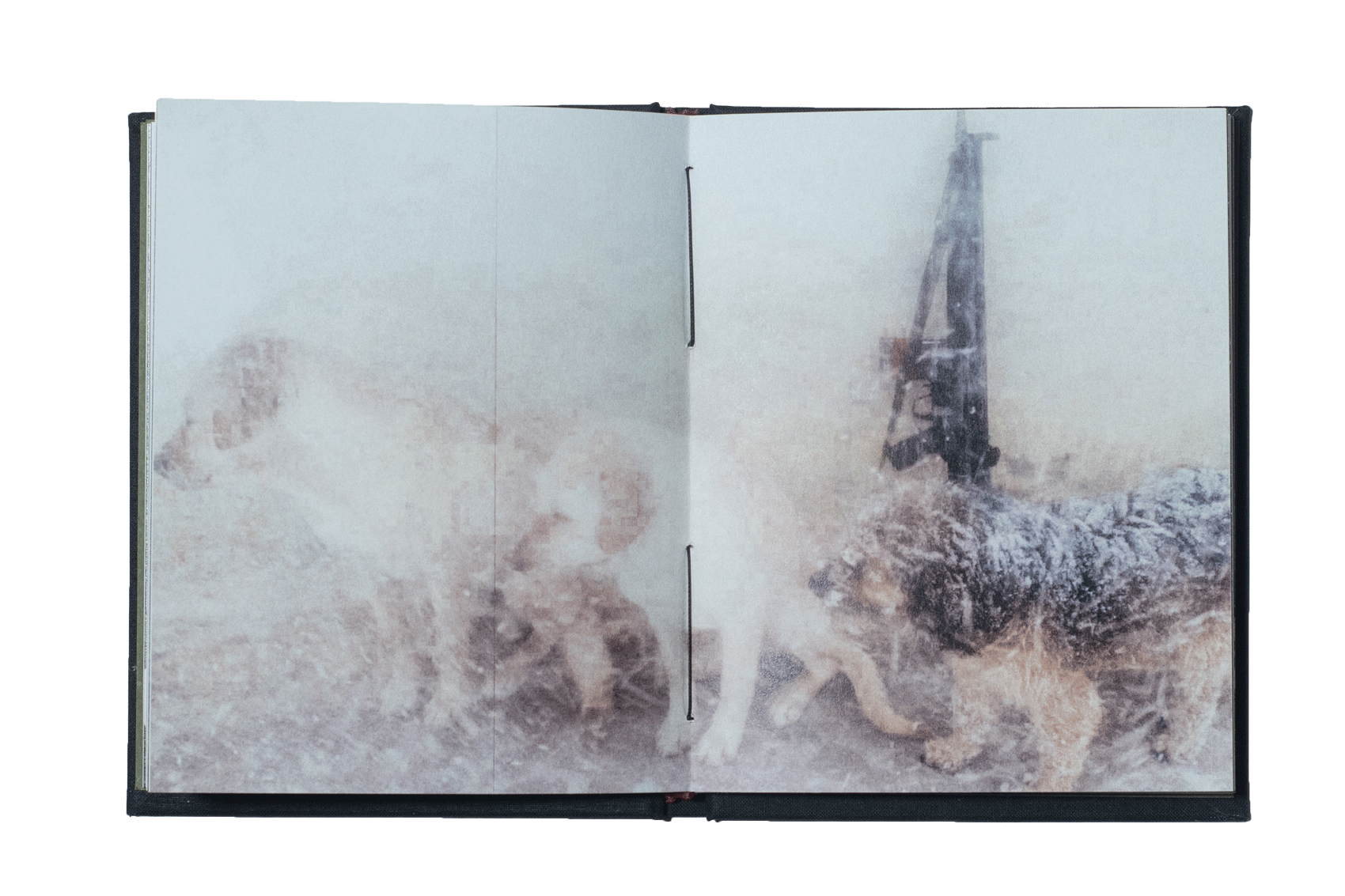
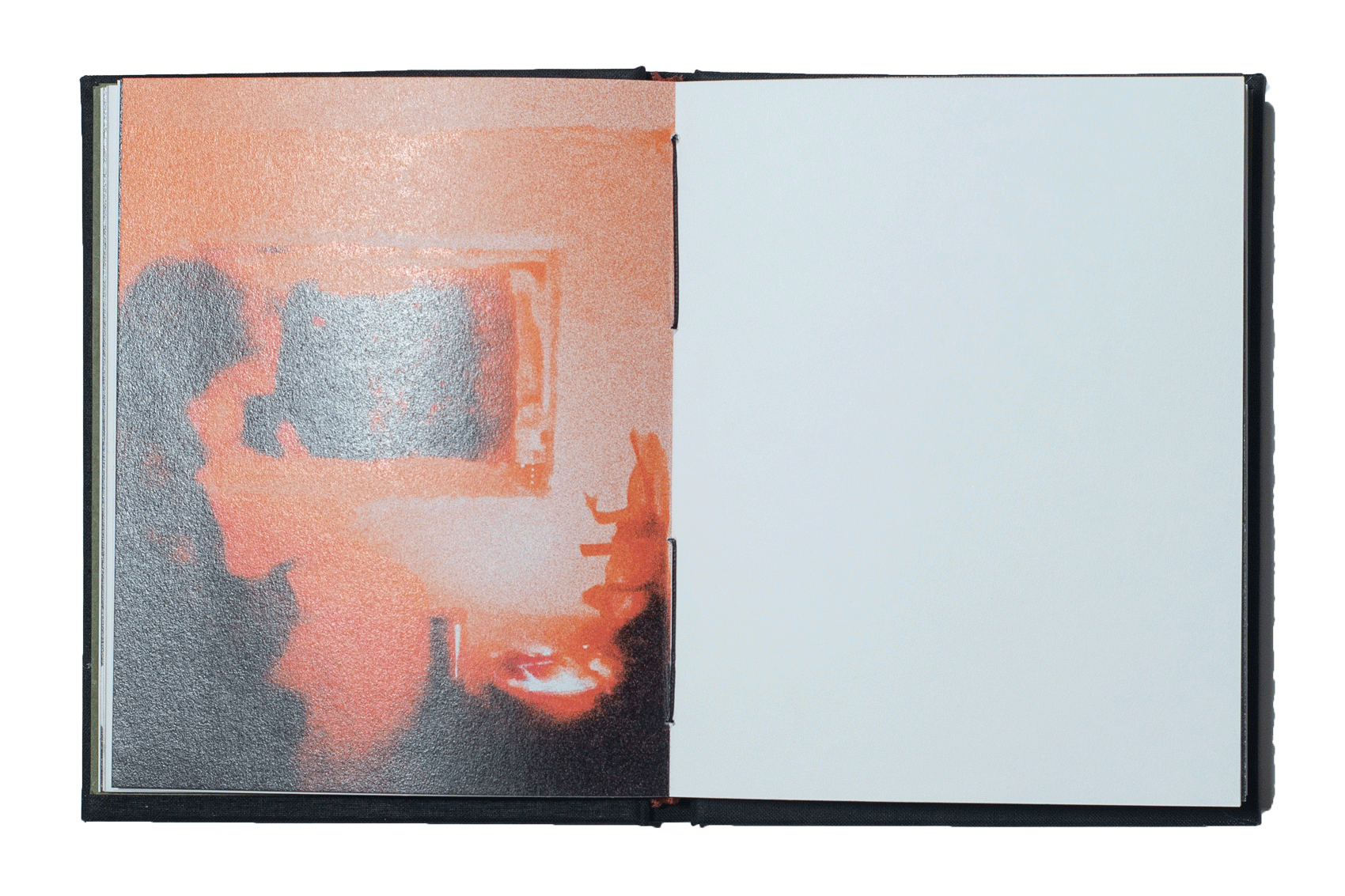

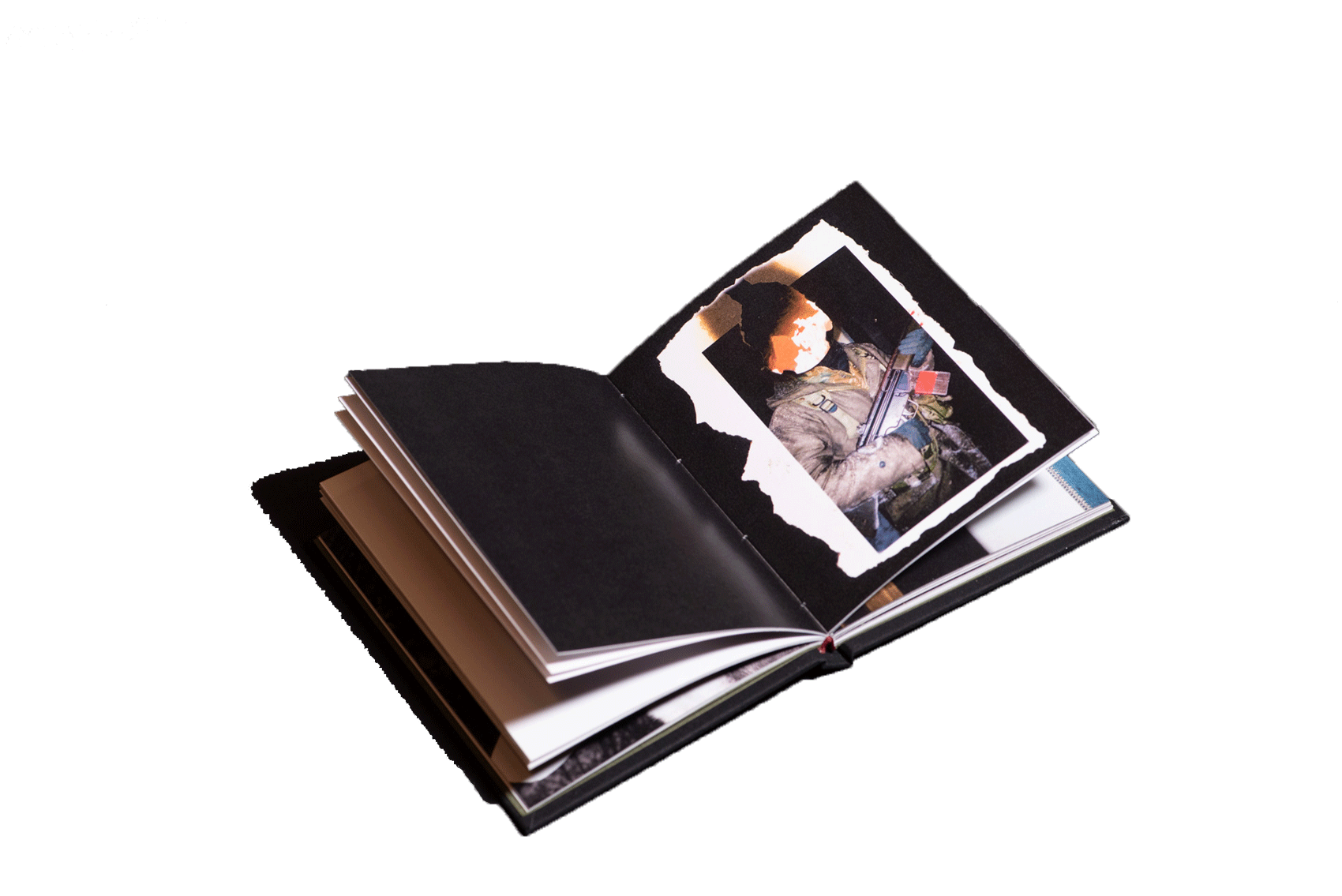

Dead End is a personal photographic project blending documentary with personal narrative from my time in the Greek army, offering a raw, unfiltered look at the lived experience of mandatory military enlistment. It invites viewers to question the normalization of conscription and reflect on the personal cost of state-imposed service.
Rather than depicting heroic narratives or the spectacle of military life —a narrative promoted by military institutions— the work turns inward. It focuses on the small, often overlooked moments that reveal the human cost of militarization: the fatigue etched into faces, the stillness between drills, the feelings of fear, resistance, and resignation. The photobook weaves these moments into a nonlinear narrative, blending documentary observation with the intimacy of a personal journal.
At its core, the project examines not only the external structure of the army, but also the internal landscapes it creates. It reflects on how militarization shapes the body and mind, how it reorganizes time and emotion, and how it continues to echo long after service ends. By presenting these experiences with honesty and vulnerability, the photobook challenges sanitized, nationalistic portrayals of conscription and invites viewers to confront the lived reality behind the military uniform.